

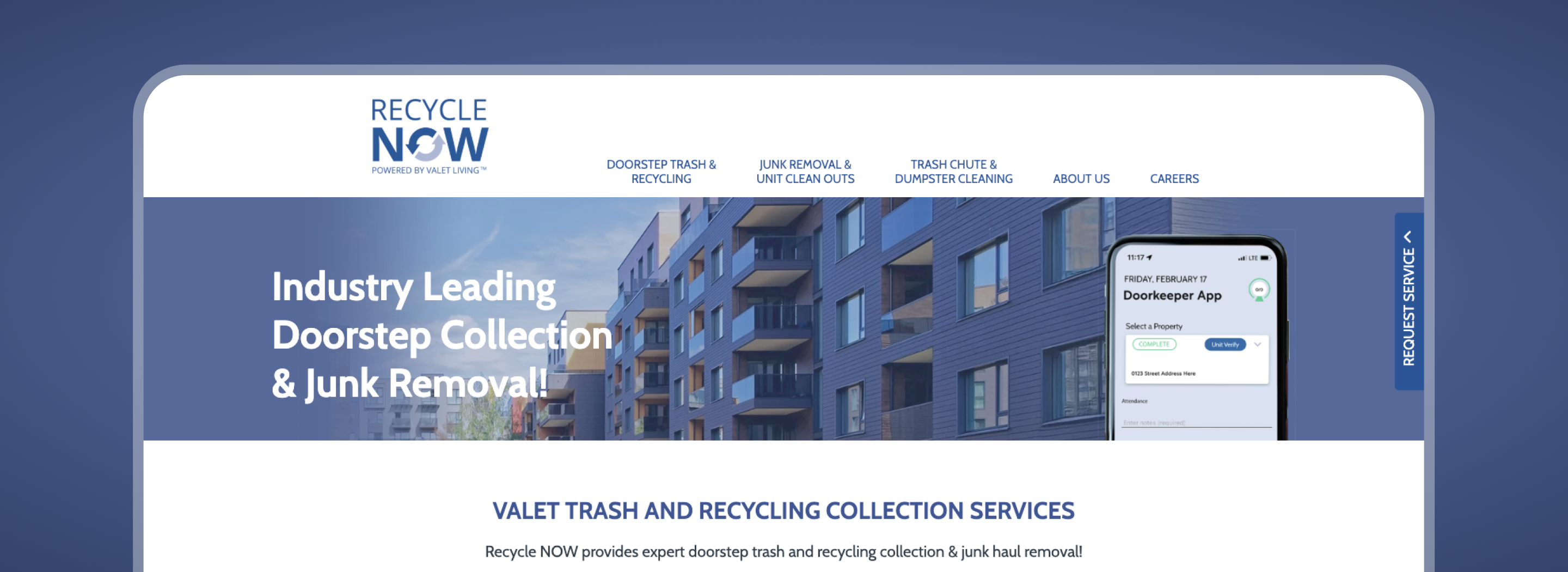
From daily crashes and six-figure rewrite quotes to 95% lower hosting costs and bugs fixed in three weeks
Services Provided
Project Recovery, Performance Optimization, Infrastructure Modernization, Mobile App Maintenance
Project Technologies
Laravel | PHP | MySQL | iOS (Swift) | Android (Kotlin) | AWS Elastic Beanstalk
Industry Served
Property Services, Waste Management
Team Composition
1 Development Manager, 1 Senior Developer
Project Duration
Ongoing since 2025
TLDR
Recycle Now's worker management platform crashed at the start of nearly every shift, leaving 150+ trash collectors unable to log in and track their work. Two development agencies quoted six-figure rewrites. Twin Sun diagnosed the problem as database performance issues compounded by an aggressive mobile connectivity check hitting the server 300+ times per second, and fixed it in three weeks. The results: server usage dropped from eight instances to one, AWS costs fell 95%, and the CEO stopped attending technical meetings because he no longer needed to worry. The platform still runs on its original tech stack, now upgraded and stable, at a fraction of what a rewrite would have cost.
The Challenge
Recycle Now’s worker management platform crashed at the start of nearly every shift. Their 150+ trash collection workers would try to log in at 8 PM, and the system would buckle under the load. Workers abandoned the app, left poor app store reviews, and started bypassing the required tracking system entirely.
The previous development team had spent months throwing hardware at the problem, spinning up additional servers without understanding what was actually happening. Their solution: a six-figure rewrite. A second agency they consulted gave the same recommendation, also quoting close to $200,000 to rebuild from scratch.
Both quotes came with misleading claims about security and maintainability that did not hold up to scrutiny.
Our Solution
Twin Sun looked at the symptoms and recognized the telltale signs of database performance problems: progressively worse performance over time, failures during peak usage, and specific pages becoming unusably slow. Before even seeing the code, we told Recycle Now this was likely fixable in two to three weeks.
When the CEO decided to take a chance on us, his logic was sound: worst case, he was out a small amount of money and still needed the rewrite. Best case, all his problems were solved.
We got to work.
First, we standardized the infrastructure. The previous team had been manually FTPing files to servers and running a patchwork of auto-scaling configurations. We Dockerized everything and migrated to Elastic Beanstalk, giving us clear visibility into what was happening and automated scaling that actually worked.
Then we added New Relic to identify the real bottlenecks. The database queries were predictably bad: unindexed columns being hammered constantly, N+1 problems on data-heavy pages. We applied theory of constraints thinking, starting with the worst offenders and working through them methodically.
But the database was not the only problem. We discovered the mobile app was making connectivity checks every single second from every device in the field. For 150 workers, that meant the server was handling 300+ requests per second just to answer the question “are you still there?” before any actual work happened. The irony: the connectivity check designed to ensure the server was running was bringing down the server.
We replaced this homegrown solution with a standard network connectivity library and pushed out mobile app updates. Server load dropped immediately.
Finally, we investigated why AWS bills had been climbing for months. The previous team had been deleting EC2 instances but leaving the attached EBS volumes behind. Hundreds of unused disk volumes were accumulating, costing thousands of dollars monthly. We cleaned them up and fixed the deployment process to prevent recurrence.
The Results
The numbers tell the story. Server usage dropped from six to eight instances during peak load to a single instance handling everything comfortably. AWS hosting costs fell by 95%. Daily crashes at shift start became a thing of the past.
But the real result was something harder to measure. The CEO stopped attending iteration meetings because he realized he did not have to worry about the technology anymore. The weekly calls that once required five people became a casual 10-minute check-in between the operations lead and our development manager. When asked why he had disappeared from meetings, Steve’s response was simple: “I just realized I didn’t have to worry about it anymore.”
Recycle Now had been holding back a backlog of features, afraid that any change would cause regressions in their fragile system. With performance stabilized and automated testing in place, they could finally move forward. Their tech spend, even with ongoing feature development, remains a fraction of what they would have paid for a rewrite that probably would have failed to capture the business logic already encoded in their system.
The platform still runs on the original tech stack, upgraded to current versions of Laravel and PHP, and is designed to serve Recycle Now’s needs for years to come.


