

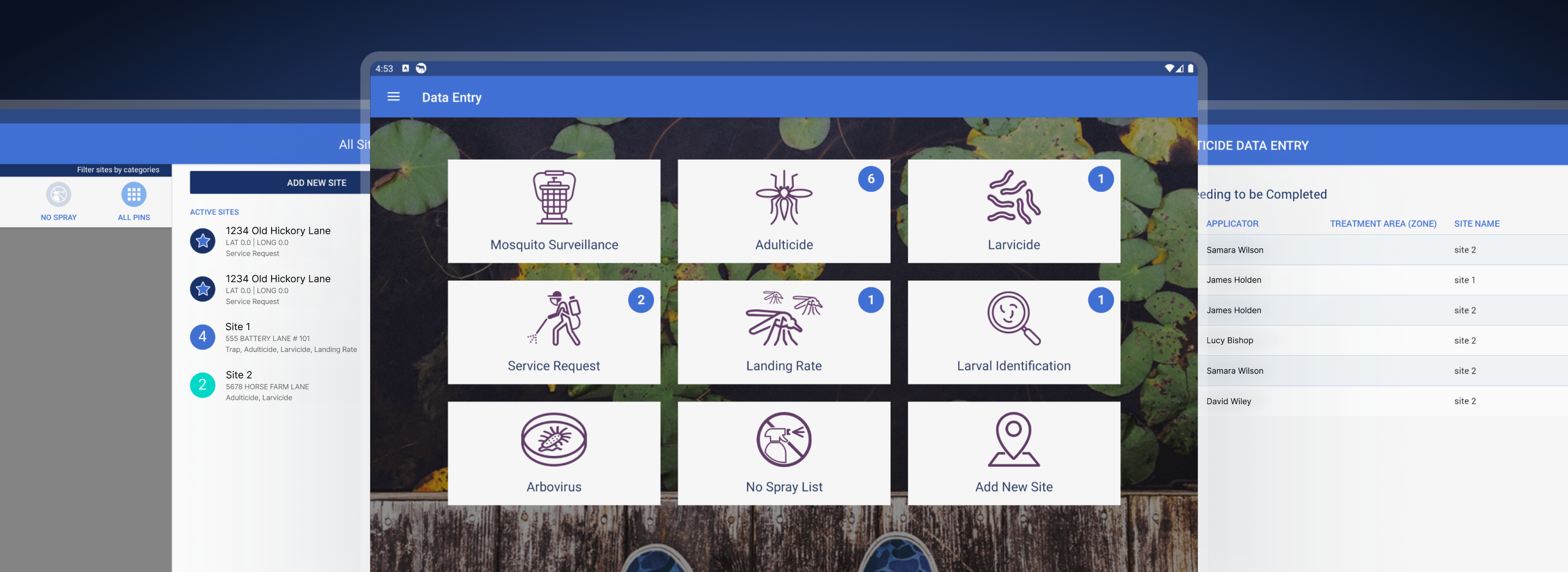
Stabilizing field data apps for a nationwide mosquito control operation
Services Provided
Mobile Development, Platform Maintenance, Infrastructure Monitoring
Project Technologies
Android | iOS | AWS | CloudWatch
Industry Served
Public Health, Field Services
Team Composition
1 Developer, 1 Project Manager
Project Duration
Ongoing
TLDR
Twin Sun assumed maintenance of mobile applications for a national mosquito control company operating hundreds of trucks and a fleet of aircraft across 20+ states. The apps had become unstable, with crashes and sync failures affecting field technicians. We added key stakeholders to CloudWatch monitoring alerts, started each day checking system health, and began notifying the team about emerging issues before they knew something was wrong. The platform is now stable enough that our ongoing support agreement rarely requires active intervention, which is exactly what good maintenance looks like.
The Challenge
The client operates mosquito control programs across more than 20 states, with hundreds of trucks and a fleet of aircraft. Their field technicians rely on mobile apps to collect surveillance data that syncs with central servers. The app had become unstable, with crashes, data sync failures, and inconsistent behavior across different Android versions. The previous development agency was no longer able to continue long-term maintenance, so they needed a new partner to take over support.
Our Solution
Twin Sun assumed maintenance of the existing mobile applications. We discovered that key stakeholders had never been added to the CloudWatch monitoring alerts, so they were often learning about server issues from frustrated drivers instead of seeing problems as they emerged. We fixed that immediately.
From that point forward, we made this client a top priority every morning. We checked CloudWatch first thing and proactively notified the team when issues were developing, often before they even knew something was wrong. When a user accidentally marked an entire year of data as complete and crashed the sync process across the platform, we diagnosed the root cause quickly and communicated clearly throughout the resolution.
The Results
The client is confident that we have their back. The platform is now stable enough that our ongoing support agreement rarely requires active intervention. They have visibility into their own infrastructure health. And most importantly, they trust that when problems arise, someone is already working on it.

Inherited Complexity
We didn’t choose the technology stack. This was pure maintenance, working within constraints established years ago by someone else. There weren’t trade-offs to weigh about architecture or frameworks. The job was to make the existing system reliable.
What we could control was how we operated. We brought better monitoring practices. We established clearer communication rhythms. We documented what we learned about the system’s quirks so that knowledge wouldn’t disappear when people rotated off the project.
By the time the initial stabilization work was complete, the client was in a different position than when we started. They had insight into their own system’s health. They had confidence that issues would be caught early. The platform is now stable enough that our ongoing support agreement is largely quiet, which is exactly what a maintenance relationship should look like.


